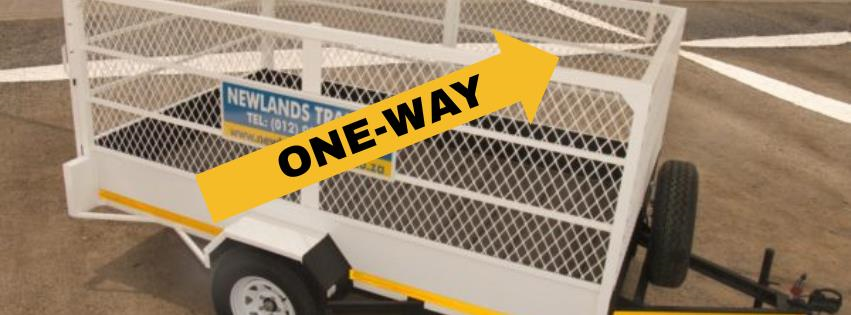
One-Way Trailer Rental Explained: What It Is and How It Works
Published: Wednesday, February 4, 2026
One-way trailer rental offers a practical solution for long-distance transport by allowing renters to collect a trailer at one location and return it at another.
Moving goods over long distances often creates a common logistical challenge: returning rented equipment to the original pickup point. This is where one-way trailer rental offers a practical and cost-efficient solution.
A one-way trailer rental allows customers to collect a trailer at one location and return it at a different branch or destination. This model is designed specifically for relocations, intercity deliveries, business transfers, and once-off transport needs where a return trip would be unnecessary or expensive.
What Is a One-Way Trailer?
A one-way trailer is a rental trailer approved for drop-off at a different location from where it was collected. Unlike traditional trailer rentals that require a return to the same depot, a one-way trailer eliminates the need for backtracking, saving both time and fuel.
These trailers are commonly used for:
- Household moves
- Business relocations
- Equipment transport
- Long-distance deliveries
- Seasonal or project-based logistics
They are available in various sizes and load capacities to accommodate different cargo requirements, from small personal loads to larger commercial consignments.
How Does One-Way Trailer Rental Work?
The process of renting a one-way trailer is straightforward and structured to minimise friction for the renter:
- Booking and Route Selection
The renter selects a pickup location and a different return location during the booking process. Availability is route-dependent, as trailers are allocated based on logistics planning and demand. - Trailer Allocation
The rental provider assigns a trailer suitable for one-way use on the chosen route. These trailers are maintained to ensure compliance with safety and roadworthiness standards. - Pickup and Inspection
At collection, the trailer is inspected, and load limits, towing requirements, and safety instructions are confirmed. The renter is responsible for securing cargo correctly before departure. - Transport Phase
The trailer is used for the duration of the agreed rental period. Because no return journey is required, the renter can plan a direct route to the final destination. - Drop-Off at Destination
The trailer is returned to the designated drop-off location, completing the rental without the need for a return trip.
Key Benefits of One-Way Trailer Rental
From a logistical and cost perspective, one-way trailer rental provides several advantages:
- Reduced Fuel and Time Costs
Eliminates unnecessary return journeys, lowering fuel consumption and travel time. - Operational Efficiency
Ideal for businesses and individuals managing time-sensitive or long-distance moves. - Simplified Planning
Allows for linear route planning rather than circular logistics. - Lower Overall Transport Costs
While one-way rentals may carry a different pricing structure, total costs are often lower when return expenses are factored in.
When Is One-Way Trailer Rental the Right Choice?
A one-way trailer rental is best suited when:
- The final destination is far from the pickup point
- The trailer is only required for a single transport task
- Returning the trailer would create unnecessary cost or delays
- The move involves tight timelines or fixed delivery schedules
Final Thoughts
One-way trailer rental is a smart transport solution for modern logistics, offering flexibility, efficiency, and cost control. By removing the need to return equipment to its origin, renters can focus on completing their move or delivery with minimal disruption.